Professional Learning Culture in Transition: On the Necessity of Reformed Performance Assessment
Performance assessments in schools, colleges, and universities influence the learning paths and opportunities of young people. A reformed assessment culture that prioritizes support over selection and understands development as a guiding principle is necessary. Educational diagnostics, particularly learning process diagnostics, offer tools for individual support through targeted observation and cooperative feedback. A systematic reform, based on collegial alignment, combines competence orientation with practicality. Teamwork and collegial curriculum development promote professionalization and alleviate the burden on teachers – for a changing professional learning culture.
By Tina Trapp, MA, Master's graduate in Business Education and future teacher Prof. MMag. Dr. Martin Bauer, Professor of Vocational Education and Business Education at the Allensbach University
Performance assessments in schools, colleges, and universities have guided and shaped young people's learning paths for centuries, thereby influencing further educational opportunities or professional careers. Assessments, in this case grades, not only touch upon fundamental questions of fairness but also constitutively affect self-concepts and the accessibility of educational and developmental paths as well as career paths. Therefore, prospectively, a transparent approach, comprehensible justifications, and the opportunity for dialogical clarification are needed (Neuweg, 2006; Sacher, 2014). It should rely on participatory and collegial support before selective decisions change the future of learners. A fair assessment system should enable orientation and, consequently, development. This kind of development and thus progress toward a new learning culture, which offers an orientation towards practice-oriented and professional competencies, individually structured teaching and learning processes, and transparent measurement of learning progress, demands considerable attention and even more commitment. The desire is for targeted pedagogical action in dealing with individual learning prerequisites and a reformed performance assessment for learners (Krauss et al., 2004), which provides a framework in the sense of adapted learning process diagnostics. Pedagogical diagnostics, a central element of teachers’ professional competence, could offer methods of targeted observation and cooperatively structured feedback. The results of the study presented in this blog confirm that such a culture is desired and that concrete tools for pedagogical diagnostics already exist. However, the fact is that at present, the corresponding implementation in school practice often falls short of such formulated demands. (KMK, 2004, p. 3 ff.)
Professional Learning Culture in Transition: The Concept of Pedagogical Diagnostics as a Theoretical Basis
Performance evaluations are powerful elements of learning culture. They guide pathways through education and decide opportunities for further qualifications. Grades structure transitions, shape self-perceptions, and thus have an impact far beyond individual assignments. Where judgments have far-reaching consequences, professional practice demands transparency, well-founded criteria, and the opportunity to clarify feedback dialogically. This is precisely where a reformed assessment culture begins, which places development before selection and understands progress as a guiding principle. This perspective combines fairness with professionalism and leads from mere numbers to comprehensible standards. This creates a framework that strengthens participation and opens up new possibilities for individual support.
To get to the bottom of these phenomena, an investigation was conducted into how effectively teachers at vocational schools implement scientifically based learning process diagnostics in the context of performance assessment for individual support. The theoretical foundation was the concept of pedagogical diagnostics. It encompasses assignment diagnostics for punctual decisions and learning process diagnostics for continuous support. The first level certifies and supports career decisions, while the second continuously regulates learning through observation, criteria, and feedback. Both are connected so that decisions remain consistent and support impulses remain effective. Teaching quality arises where requirements are transparent, learning steps become observable, and feedback makes the next step visible. Learning process diagnostics are concretized through systematic observation and cooperatively structured feedback. Observation is based on indicators of classroom management, cognitive activation, and supportive interaction. Regular learning progress checks show growth and highlight stumbling blocks. Diagnostic learning tasks make thought processes visible and link goals with criteria. Errors and processes are analyzed to build strategies and foster metacognitive insights. Cooperative feedback actively involves learners. Discussions with goal agreements provide structure and orientation. Peer formats open up new perspectives. Feedback literacy strengthens the ability to understand, evaluate, and translate feedback into action. Portfolios and journals document progress and support evidence-based discussions about development. This gives contour to the idea of fair, competence-oriented performance assessment.
Research shows that identical grades don't necessarily mean identical competence levels. Assessments vary across contexts, making clear, criterion-referenced evaluation all the more important. Formative processes combine motivation and learning progress when criteria are understandable and feedback is dialogic. This opens up scope for fairer practice and reduces the dominance of mere numerical grades. The outlined agenda does not promise quick effects. It calls for careful clarification, collaborative work on tasks and criteria, and a culture of professional exchange. On this basis, a learning culture can be changed and performance assessment can promote learning.
Procedure of the analyses and surveys
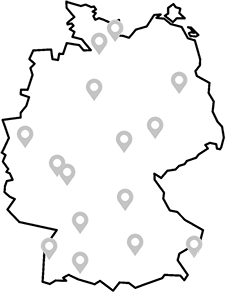
The empirical study, briefly presented here before its actual publication, follows a quantitative cross-sectional design with supplementary analysis of open-ended responses. The aim of the research activities was to determine the status quo, identify hurdles and conducive factors, and make visible the gap between theory and practice, in order to derive practical impulses and recommendations for action for a sustainably diagnostic and development-oriented assessment culture. Specifically, the attitudes of vocational school teachers in a county were collected. The basis for this was an online survey with five-point ratings and clearly defined scale conditions. The total population comprised five hundred and fifty individuals. For this population, a minimum sample size of sixty-one individuals was calculated in order to obtain stable estimates with a margin of error of ten percent and a confidence level of ninety percent. The response rate reached seventy-six fully evaluable cases, thereby increasing the precision of the estimates under the chosen premises. Common key figures were calculated for the descriptive statistics, and the interval assumption of the ratings is based on established prerequisites. The field phase took place in May 2025. Data collection, data preparation, and graphical representation followed a documented process using common software tools. Data protection and anonymity were maintained, and the comprehensibility of the items was ensured through pre-testing.
In addition, free-text responses were systematically evaluated. The qualitative content analysis served to condense recurring arguments. It supplemented the quantitative findings without altering the overall character as a cross-sectional analysis. This mixed-methods approach allowed for a nuanced view of attitudes, barriers, and desired support. This made it possible to highlight connections between attitudes and needs, and to generate practical recommendations for designing a learning-conducive assessment culture. The result was a consistent picture that clearly identifies strengths and gaps.
Research results
The evaluation shows a dual movement. On the one hand, the symbolic meaning of numerical grades is highly valued. On the other hand, the use of competence-oriented feedback in everyday practice, which is conducive to learning, is comparatively low. This creates a gap between accepted traditions and desired developmental goals. Teachers describe traditional grades as having little benefit for learning processes, yet they adhere to them. This tension shapes both attitudes and practices. It explains why reforms require diligence, time, and evidence. Without reliable criteria, without common examples, and without dialogical procedures, the stated goals remain unrealized.
A finding regarding diagnostic expertise provides particularly clear indications. Only a small proportion of respondents reliably distinguish between referral diagnostics and learning process diagnostics. This marks a central area for professionalization. Where this distinction remains unclear, there is a lack of support for methods that make development visible. Teachers name specific reasons for this. Daily routines are demanding, time resources are scarce, class sizes are challenging, and regulations limit room for maneuver. In addition, there is a need for further training and a desire for practical tools. This is where a reform agenda comes in, rethinking qualification, working time, and manageable instruments.
Further results categorize the need for structures and leadership. Teams want clear sets of criteria, portfolios for documenting progress, and coordinated agreements at the school level. Transparent standards, binding documentation, and a shared perspective on task quality are desired. Portfolios and learning journals are considered suitable vehicles because they consolidate evidence and structure discussions. Feedback should be regular, criterion-based, and dialogic. This strengthens motivation, self-regulation, and fairness. School administrators can support this change through priorities, timeframes, and shared processes. This combination connects procedures, professionalism, and culture. This fosters consistency in judgment and reliability in daily practice.
The study remains reflective within its limitations. The spatial scope limits transferability; the ratings primarily reflect attitudes rather than observed actions. Nevertheless, the estimates provide stable orientations at the group level. The value extending beyond the sample arises from the theoretical condensation. These analyses do not lead to a quick recipe. Instead, a systematic change is required that focuses on tasks, criteria, feedback, and documentation. Schools can understand assessments as part of a comprehensive didactic concept. Then, transparency, dialogue, and evidence combine into a practice that supports competence development and enables fair decisions. Where professionalization occurs within the team, the opportunity grows to anchor formative procedures for everyday use and to relativize the dominance of numerical grades. In this way, learning culture can truly be shaped.
Conclusion
The study depicts a learning culture in transition. The dominance of numerical grades conflicts with target visions that emphasize development and participation. This also fuels the desire for fairer, learning-process-oriented methods. A careful reform should focus on transparency, dialogue, and documentation (Sacher, 2014; Reusser, 2014). Such a reformed assessment of performance could then combine transparent criteria, dialogical feedback, and reliable documentation of progress. As well as supporting motivation, self-regulation, and fairness. The collected data on the changing professional learning culture indicate a need for time, training, and robust tools to enable alternative grading in the sense of a combined, status-related assignment diagnosis and learning-process-related developmental diagnosis. Reform should be systematic and based on collegial consensus. This way, a practice that combines competence orientation with everyday applicability can emerge (Beutel and Pant, 2020; Reusser, 2014; Black/William, 2003; Trapp, 2025). Professionalization can only succeed in teams. Collegial curriculum development can then link working on tasks with working on criteria. Such routines relieve individuals and increase the consistency of judgments (Helmke, 2017). Teachers thus gain confidence and can anchor formative methods in everyday practice (Sacher, 2014). As a result, aspirations and practice converge, as criteria, examples, and feedback come together in one system (Grunder/Bohl, 2012).
Extended Bibliography[1]
Bauer, M. (2019), Corporate training and continuing education for adult education employees. Hamburg, Kohlhammer Verlag
Beutel, S. I./Pant, H. (2024), Learning Without Grades. Concepts for Fair Assessment. 2nd ed., rev., Stuttgart, Kohlhammer Verlag.
Black, P./William, D. (2003), In: Praise of Educational Research formative assessment. British Educational Research Journal Vol. 29 No. 5 p. 623–637.
Black, P./Wiliam, D. (2009), Developing the theory of formative assessment. Educational Assessment, Evaluation and Accountability, 21(1), pp. 5–31. https://doi.org/10.1007/s11092-008-9068-5
Bohl, T. (2003), New Instruction, New Assessment of Performance. In: Vorndran O. and Schnoor D. (Eds.) Schools for the Knowledge Society. Gütersloh, Verlag Bertelsmann Stiftung, pp. 211–231.
Deno, S. L. (1985). Curriculum based measurement: The emerging alternative. *Exceptional Children*, *52*(3), 219–232. https://doi.org/10.1177/001440298505200303
Egger, R./ Bauer, M. (2017), University as a Partner in Education. Tertiary Continuing Education for a Successful Future. Mainz, Springer
Ellmin, R./Ellmin, P. (2010), Making Learning Processes Visible and Understandable. Pädagogik Jg. 62, Heft 12, p. 16–20.
Klieme, E./Avenarius H./Blum, W./Döbrich, P./Gruber, H./Prenzel, M./Reiss, K./Riquarts, K./Rost, J./Tenorth, H. E./Vollmer, H. J. (2003), On the Development of National Educational Standards. Berlin, Federal Ministry of Education and Research.
LaLonde, K./Uhrig, S./Snodgrass, M. R. (2023), The basics of CBM: What BCBAs need to know. Behavior Analysis in Practice, 16, p. 1887–1902. https://doi.org/10.1007/s40617-023-00823-6
Neuweg, G. H. (2006), School performance assessment. Legal foundations and pedagogical assistance for school practice. 3rd, updated and expanded ed. Guide for school practice. Trauner, Linz.
Nicol, D. J./Macfarlane-Dick, D. (2006), Formative assessment and self-regulated learning: A model and seven principles of good feedback practice. Studies in Higher Education, 31(2), 199–218. https://doi.org/10.1080/03075070600572090
Pohlmann-Rother, S./Kürzinger, A./Lipowsky, F. (2020), Feedback in early elementary school instruction. Zeitschrift für Erziehungswissenschaft, 23(3), p. 591–611. https://doi.org/10.1007/s11618-020-00950-0
Raithel, J. (2012), Quantitative Forschung Ein Praxiskurs. 2nd revised edition. Wiesbaden, VS Verlag für Sozialwissenschaften.
Reinders, H. (2011), Questionnaire. In H. Reinders, H. Ditton, C. Gräsel, & B. Gniewosz (Eds.), Empirical Educational Research. Wiesbaden, VS Verlag.
Reusser, K. (2014), Competency Orientation as a Leading Concept in Didactics. Contributions to Teacher Education 32, 3, p. 325–339.
Robert Bosch Foundation (2023), The German School Barometer. Stuttgart.
Sacher, W. (2014), Developing, reviewing, and assessing achievements: proven and new paths for primary and secondary education, 6th revised and expanded edition. Ed., Bad Heilbrunn.
Sacher, W./Hacker, T. (2006), Portfolio: An instrument for the development of self-determined learning. Hohengehren, Schneider Verlag. In: Unterrichtswissenschaft 35 (2007) 3, p. 283–285
Weinert, F. E. (Ed.) (2001), Performance Measurement in Schools. Weinheim and Basel, Beltz.
[1] This directory lists additional professional literature alongside the used literature to enable a deeper exploration of topic-related individual aspects.